
Settling and Wandering
News of the WorldThis thread follows the contrast between fixed houses and the mobile life Cicada ultimately chooses, showing how home can be a practice rather than a place.
increasing Bearing strength in each event
 decreasing
Bearing strength in each eventdecreasingKiowa Movement

Kiowa Movement
Home in motion
Cicada remembers a life organized around travel, water, animals, and changing camps. Movement is not homelessness to her but a familiar way of belonging to a people and landscape.
A different measure of comfort
The habits of doing without food, shoes, or shelter shape her sense of resilience. The novel presents this life as a coherent culture rather than merely a lack of settled conveniences.
The House That Cannot Travel
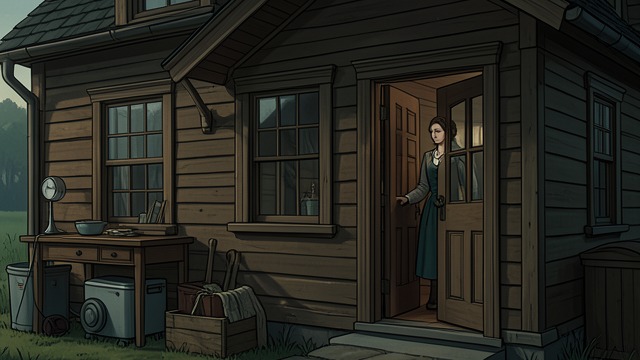
The House That Cannot Travel
Objects without meaning
Cicada studies windows, curtains, furniture, photographs, and dishes as puzzling arrangements. A fixed house seems to her an enclosure full of things whose purpose she cannot infer.
Settlement as estrangement
The Leonbergers regard the house as familiar and proper, while Cicada experiences it as alien. Their disagreement shows that physical shelter alone cannot create a sense of home.
A Home on Wheels
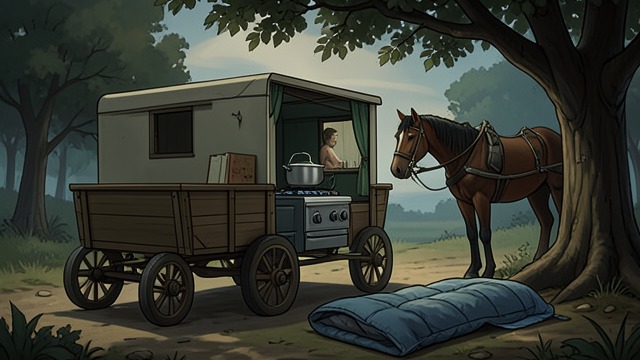
A Home on Wheels
Repeated routines
The wagon allows Kidd and Cicada to establish recognizable patterns of cooking, sleeping, tending horses, and traveling. Its small space becomes a shared environment through repetition.
Security in change
For Cicada, regular movement can feel safer than remaining in an unfamiliar house. The wagon offers a kind of home that preserves motion instead of requiring her to surrender it.
A Cattle Drive Chosen
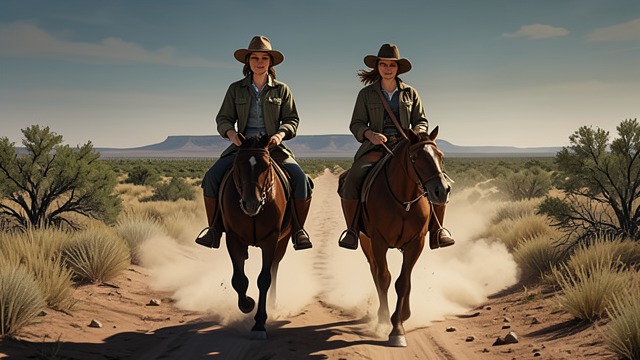
A Cattle Drive Chosen
Movement by consent
Cicada joins Calley on a cattle drive to Missouri, a life of travel that she can embrace. Unlike the road with Kidd, this movement belongs to her adult choice.
A future in familiar motion
She and Calley continue riding Texas cattle country together. Mobility becomes not a temporary refuge from an unwanted placement but a lasting form of work and partnership.
The Airplane in Uvalde
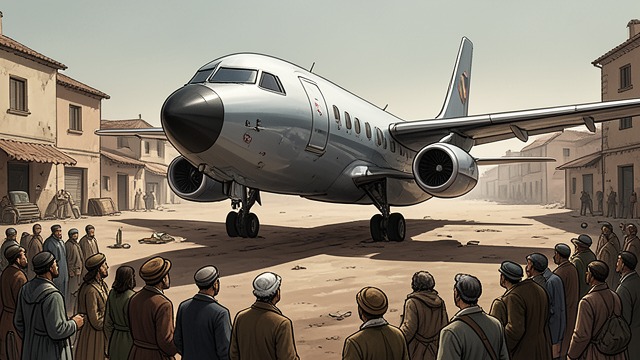
The Airplane in Uvalde
A new world witnessed
Cicada and Calley live long enough to see an airplane land in Uvalde and watch its pilot walk away. Their lives extend from frontier travel into a transformed technological age.
Continuity across eras
The moment joins an old mobile life to modern machinery and marks the distance traveled since the wagon journey. Cicada’s story remains rooted in movement even as the world changes around her.
During Cicada’s years among the Kiowa
Early April 1870, inside the Leonberger home
Spring 1870, during the journey north from San Antonio
After Cicada and John Calley marry
Near the end of Cicada and Calley’s lives
